Few game developers have left as profound a mark on the intersection of music and interactive media as Harmonix Music Systems. From the early days of Frequency to the party-driven chaos of Fuser, Harmonix has constantly redefined what it means to play with music. But how do their flagship titles stack up against one another? Let’s dive into a comparison of their most iconic games Frequency, Amplitude, Guitar Hero, Rock Band, Dance Central, and Fuser—through the lenses of gameplay mechanics, musical depth, and replayability.
Gameplay Mechanics: From Rail-Shooting to Full-Band Jams
Harmonix’s games have always innovated around how players interact with music.
- Frequency (2001) & Amplitude (2003) introduced a futuristic, rhythm-rail mechanic. Players hit notes on separate instrument “tracks” (drums, vocals, bass, etc.) by switching lanes and maintaining rhythmic combos. It felt almost like a puzzle game blended with DJ work.
- Guitar Hero (2005) turned the formula into a pop culture phenomenon. With a guitar-shaped controller, players matched on-screen notes to simulate shredding solos. While Harmonix only developed the first two Guitar Hero games, they set the standard for instrument-based rhythm gameplay.
- Rock Band (2007) expanded the scope, supporting vocals, drums, bass, and guitar, offering the full-band fantasy. The gameplay rewarded coordination, harmony, and group energy, making it the ultimate living room concert simulator.
- Dance Central (2010) took a different route, focusing on full-body motion tracking via Kinect. It wasn’t about instruments—it was about becoming the music through choreography, perfectly syncing physicality with rhythm.
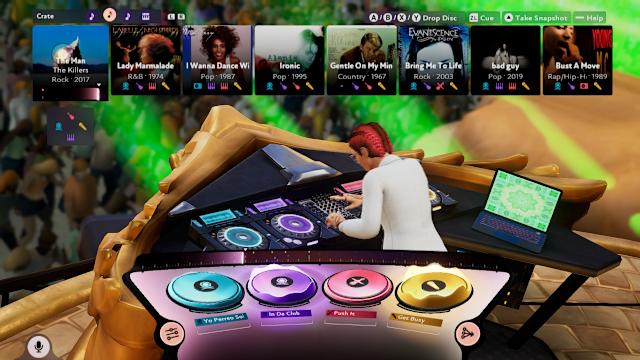
- Fuser (2020) flipped the script again. Here, you play a DJ at a music festival, dropping beats and manipulating song stems (vocals, bass, drums, etc.) in real-time. It’s less about hitting notes and more about remixing on the fly.
Best for hands-on rhythm precision: Amplitude
Best for party gameplay: Rock Band
Most innovative remixing mechanic: Fuser
Musical Depth: Layering, Licensing, and Sonic Diversity
When it comes to musical depth, Harmonix games differ greatly based on format and era.
- Amplitude and Frequency often used electronica and experimental tracks, many of them composed specifically for the game. Each track was broken into individual components, letting you isolate basslines, beats, and melodies.
- Guitar Hero and Rock Band made licensed music mainstream in rhythm games. Over time, Rock Band built a catalog of thousands of songs across rock, metal, pop, and indie genres—each with full-instrument breakdowns.
- Dance Central focused on high-energy pop, R&B, and hip-hop—songs designed to get you moving. The choreographic design added a unique layer of interpretive depth.
- Fuser is arguably Harmonix’s most musically creative game. Each song is split into four stems, and players can combine vocals from one track with drums from another, creating endless remixes. It’s a sandbox for musical exploration.
Most musically intricate: Fuser
Best licensed music library: Rock Band
Best integration of music and movement: Dance Central
🔁 Replayability: Longevity, Community, and Customization
Replay value is where Harmonix games show their true colors.
- Amplitude and Frequency offer fast, addictive gameplay and score-chasing, but a limited song list can cap long-term appeal.
- Guitar Hero and especially Rock Band created entire ecosystems. With Rock Band Network and endless DLC, players could build libraries tailored to their tastes. Weekly song drops kept players engaged for years.
- Dance Central’s replayability depended on your interest in physical activity, though later entries added multiplayer and freestyle features.
- Fuser emphasized creative expression. You could spend hours crafting sets, sharing mixes online, and participating in themed events. The lack of new DLC post-launch hurt its longevity, but its core remains endlessly replayable for music lovers.
Most replayable for creatives: Fuser
Most replayable for performance: Rock Band
Most replayable for competitive players: Amplitude
Final Thoughts: Harmonix as a Musical Playground
Each Harmonix title reflects a different philosophy about music and play. Whether you’re tapping into trance beats in Amplitude, jamming with friends in Rock Band, dancing it out in Dance Central, or DJing a genre-bending set in Fuser, you’re always engaging with music in a way that feels active and personal.
Harmonix may have evolved with the times, but one thing remains the same: they don’t just make games you experience music through them.
 Harmonix